
Where Two Tracks Collide: Welcome to the Toba-Kaidō Phenomenon
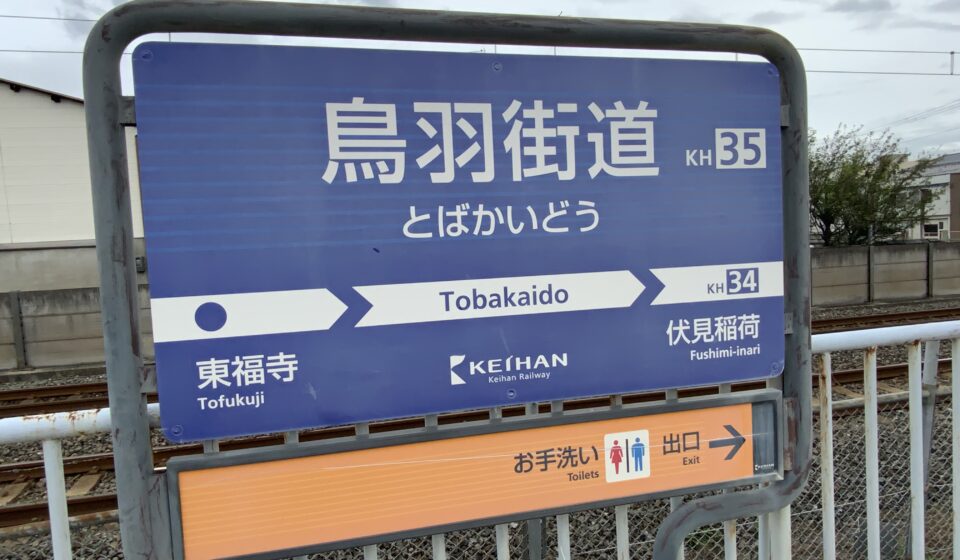
If you want to experience the sheer diversity of Kansai’s railway networks, few vantage points rival Toba-Kaidō Station in Kyoto. Situated on the Keihan Main Line—a vital artery connecting the historic streets of Kyoto with the bustling commercial core of Osaka—this modest commuter stop holds a massive secret.
Toba-Kaidō is positioned right next to one of Nintendo’s corporate development buildings, but the real draw for railfans lies right across the fence. Here, the tracks of the JR West Nara Line run directly parallel to the Keihan Main Line. The result? A literal cross-company racetrack where private commuters and JR workhorses battle for speed right before your eyes.
The Ultimate Parallel Grid: Keihan vs. JR West Fleets
Standing on the platform gives you an absolute masterclass in Japanese rolling stock. From iconic double-decker express trains to vintage commuter legends, here is the incredible lineup you can observe:
The Keihan Main Line Contenders
Keihan 8000 Series: The undisputed flagship of the line. Adorned in a striking elegant red and yellow livery, this premium limited express features a magnificent double-decker car and the luxurious “Premium Car.” Watching it glide elegantly past at high speed is unforgettable.
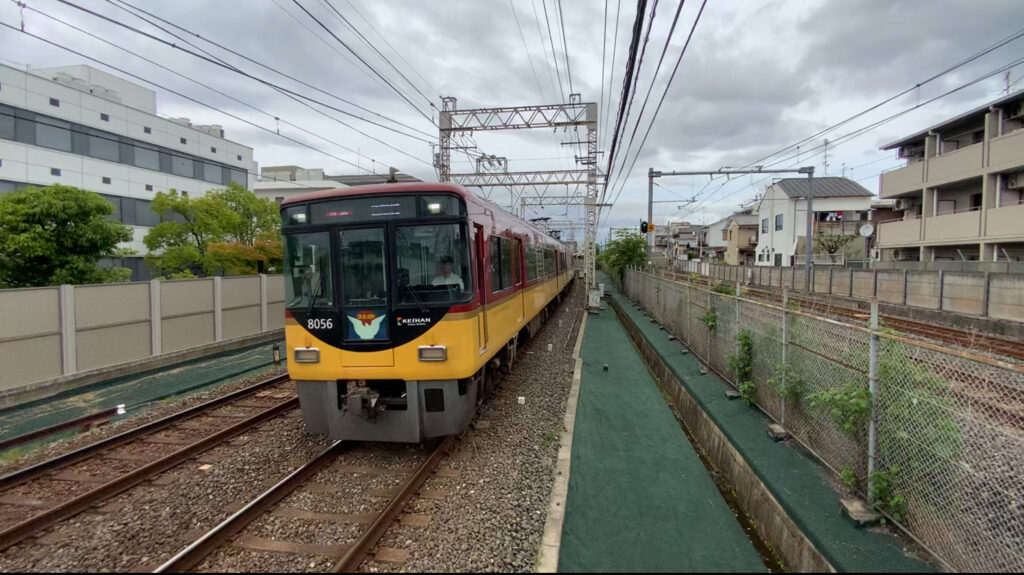
(This is the Keihan 8000 series. The all-red premium car was put in after it went popular with 3000 series.)
Keihan 3000 Series: Known as the “Comfort Saloon,” this sleek, dark blue-and-white fleet handles rapid express services. It sports a modern, curved front face and a smooth, futuristic profile.
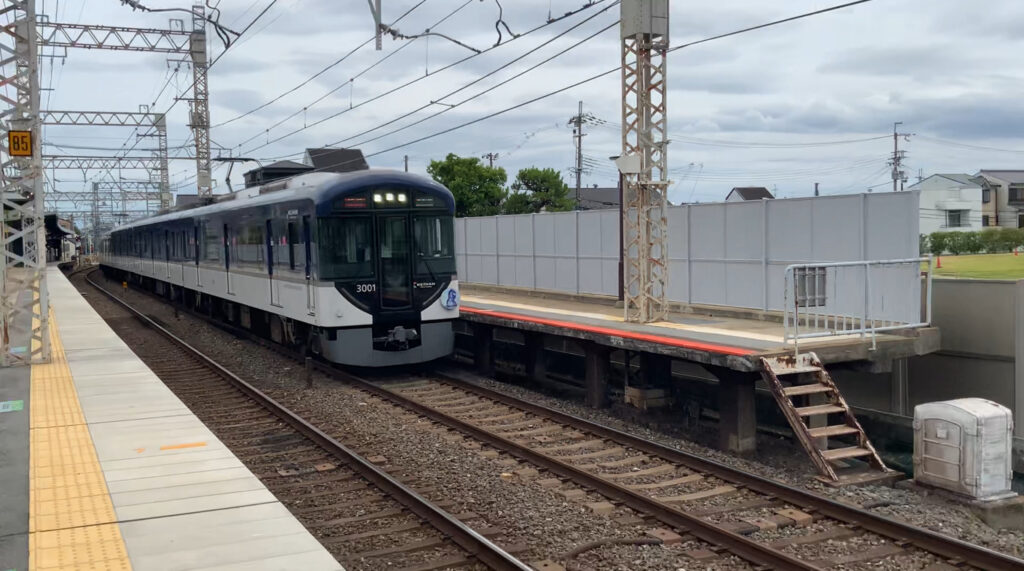
(Keihan 3000 series. The new Keihan style is inherited here.)
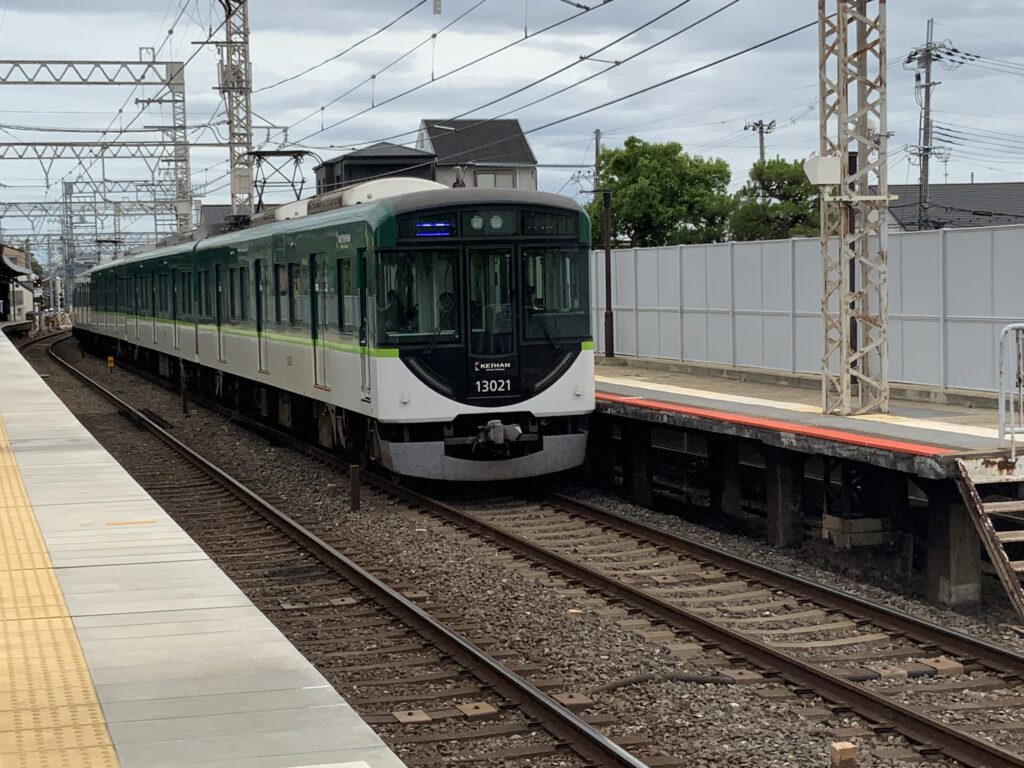
Keihan 13000 Series: The modern face of Keihan’s commuter fleet. Wrapped in the standard “Rest Green” and “Atmos White” corporate colors, these highly efficient EMUs are a constant presence.
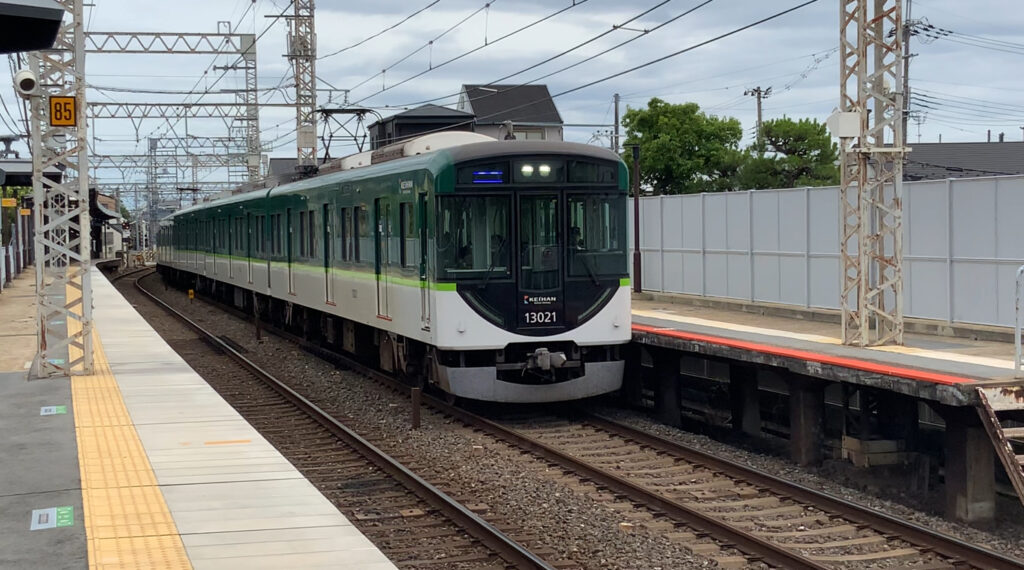
(Another next-generation train, while its pantographs remain retro.)
Keihan 7200 & 9000 Series: These robust late-1990s aluminum workhorses provide a wonderful evolutionary bridge, handling everything from local routes to sub-express duties with classic commuter styling.
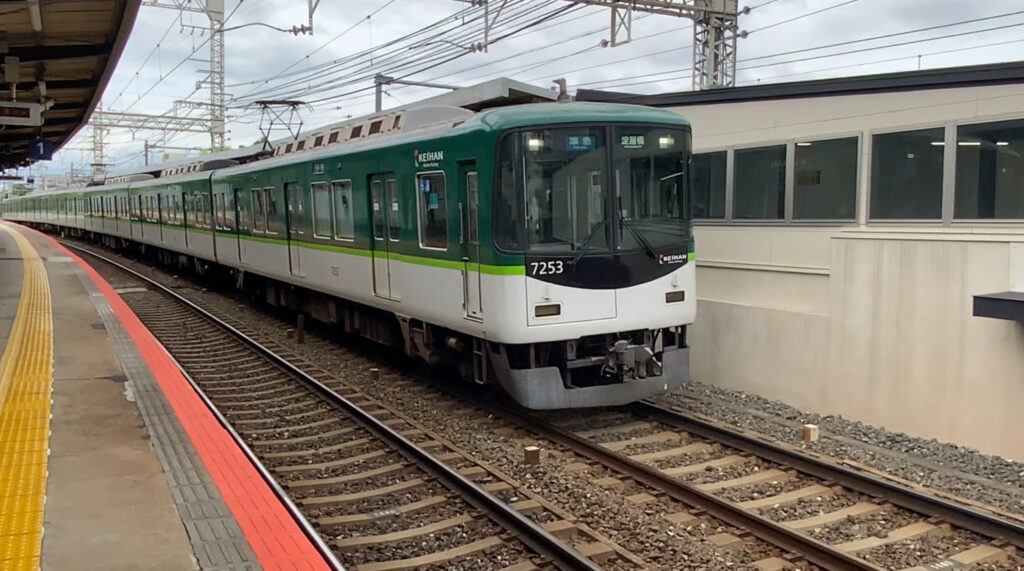
(This is Keihan 7200.)
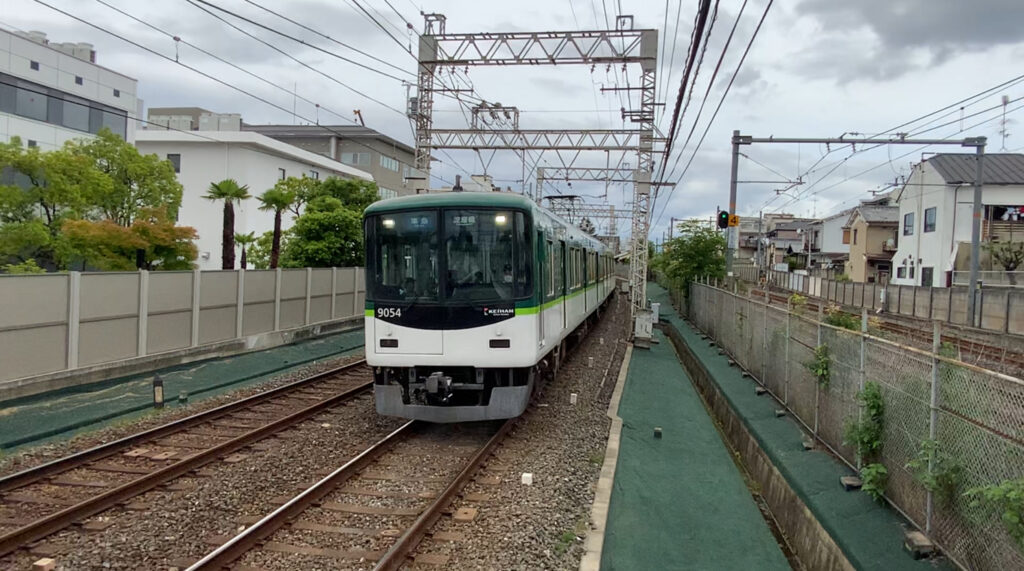
(This is Keihan 9000. It looks similar to 7200.)
Keihan 7000 Series (Upgraded): Keep a sharp eye out for these! Keihan’s ongoing fleet renewal program has given select 7000 series sets complete interior overhauls inspired by the 13000 series, complete with full-color exterior LED destination boards and modern traction controls.
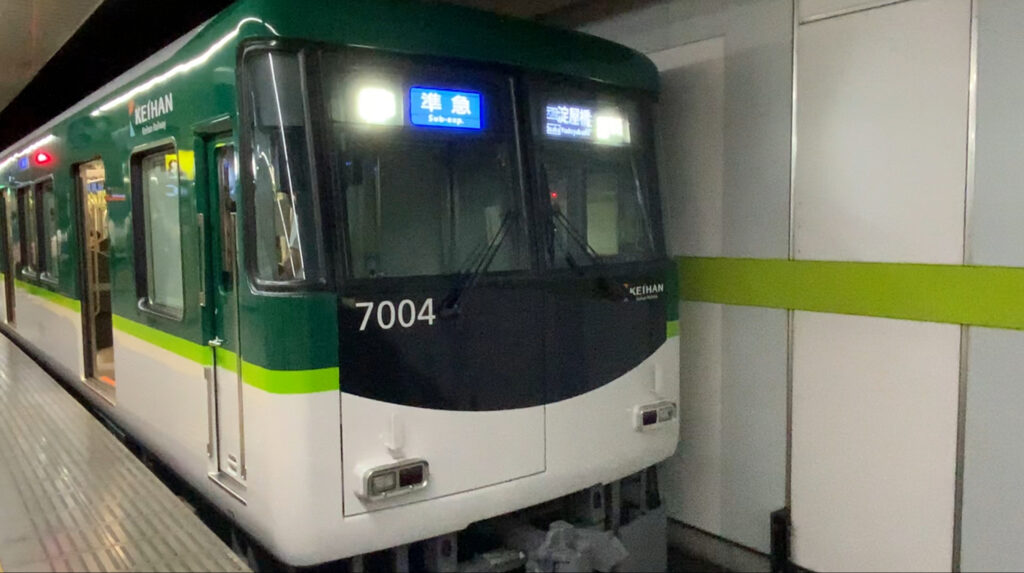
(This was taken at Demachiyanagi station.)
Keihan 2400 Series: A historic icon. First introduced in late 1969, it holds the legendary title of being the very first commuter train in Western Japan to feature built-in air conditioning. Its roofline is distinctively packed with cooling units.
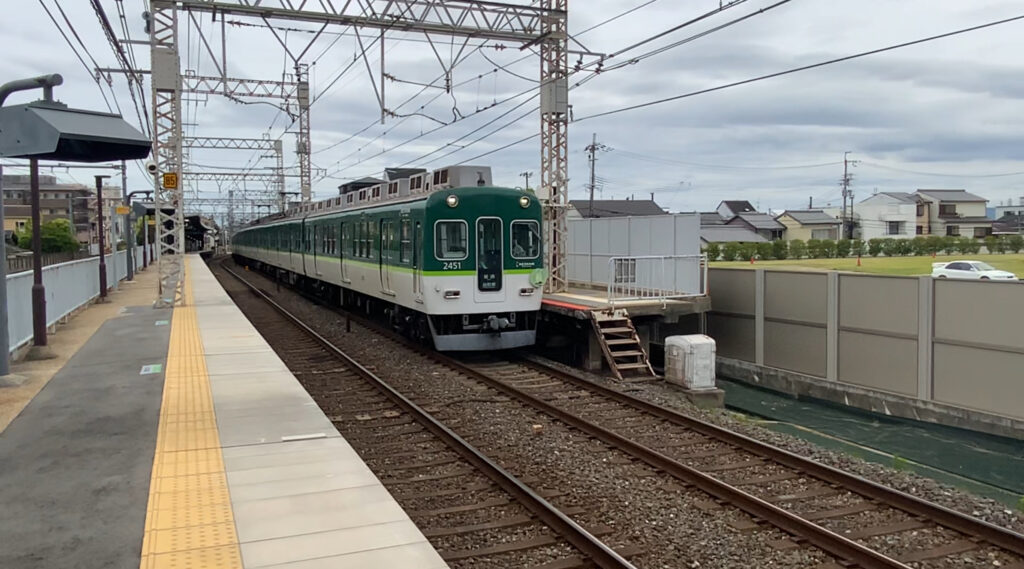
(The boxes on the roof are the first air conditioning systems built directly inside trains.
Keihan 1000 Series: Another vintage legend holding down the line. Built on older frames but extensively modernized over the decades, its unique circular headlight housings and classic mechanical hum scream nostalgic Showa-era rail travel.
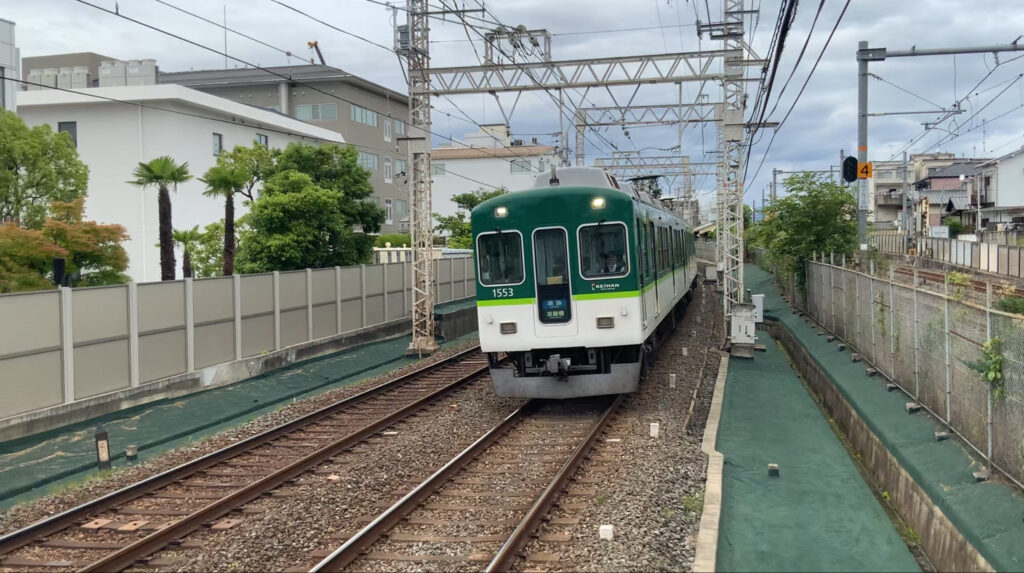
The JR West Nara Line Competitors
Directly over the boundary fence, the JR West Nara Line brings its own heavy-hitting roster to the racecourse:
- JR West 221 Series: The absolute king of regional rapid transit. Draped in its signature white body with brown and blue stripes, this vintage “Amity Express” powerhouse handles the Miyakoji Rapid services with incredible acceleration.
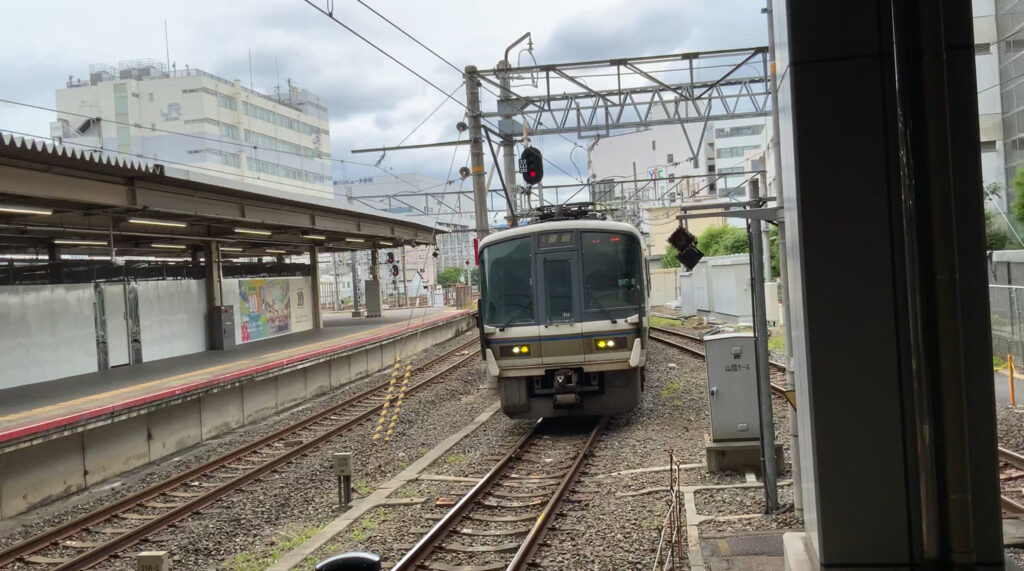
(This is 221 series. This photo was taken at Kyōto station. It has traditional West-style seating with seats that can change direction.)
JR West 205 Series: A true treasure for vintage rail fans. These classic, boxy stainless-steel commuter trains—initially famous on Tokyo’s Yamanote line decades ago—now spend their days providing dependable, nostalgic local service through Kyoto.
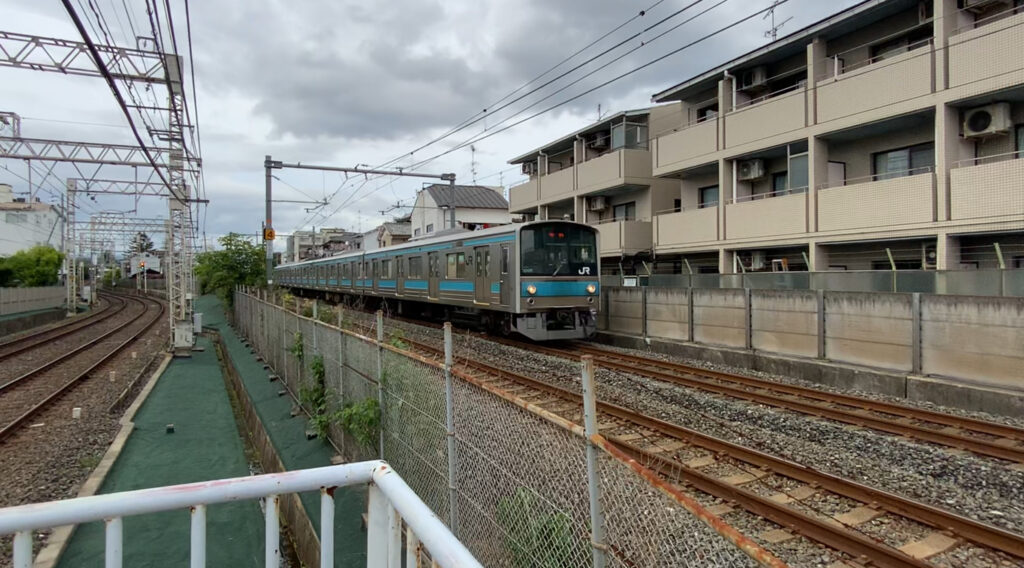
(This train is a very rare train, as only a few counterparts exist in the world right now.)
Blink and You’ll Miss It: The Ultimate Inter-Line Drag Race
The crowning achievement of any trip to Toba-Kaidō Station is the rare, spine-tingling moment where scheduling alignment rewards you with a side-by-side train race.
When fortune favors your visit, a local Keihan 13000 or a roaring 8000 series limited express will sync perfectly with a JR West 221 Series Miyakoji Rapid or a 205 local. You will witness both trains screaming down the parallel straights, zooming past each other in a magnificent clash of green, white, blue, and red. The sound of dual horns echoing off the nearby Nintendo building while the tracks rumble beneath your feet is pure adrenaline for any rail enthusiast.
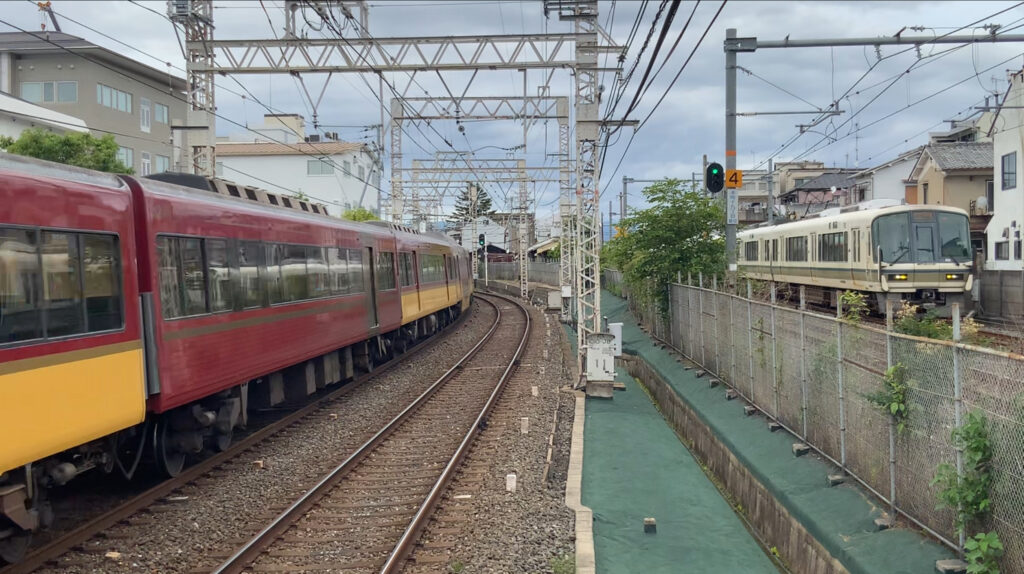
(This is Keihan 8000 in the left, 221 in the right. This shot is so cool!)
Unobstructed Lines of Sight: Low Fences, Epic Photography
Beyond the incredible action, what makes Toba-Kaidō an absolute favorite for photographers is the station layout itself. At major urban terminals, your lens is usually blocked by high metal safety mesh, thick plexiglass barriers, or massive platform doors.
Not here. The perimeter fences running along the edge of the station platforms are incredibly low. This design gives you a crystal-clear, unhindered line of sight directly over to the parallel JR West tracks and down the Keihan straightaways. You don’t have to squeeze your camera lens through tiny wire gaps or hold your phone awkwardly over your head—you can easily compose stunning, clean, eye-level roster shots and panning videos of passing fleets with zero obstructions.
(Here, I didn’t take this from a high angle. The fence is just incredibly low!)
The Mid-Week Sanctuary: The Uninterrupted Railfan Experience
While major junction hubs like Kyoto Station or Sanjō Station offer plenty of volume, they also come with heavy crowds, pushing commuters, and constant platform interruptions.
Toba-Kaidō’s true superpower is its incredible tranquility during weekday daytime hours. If you head out on a Tuesday or Wednesday afternoon, you will find a virtually deserted platform. With only a scattering of local passengers, you can set up clean, unobstructed angles along the fence or platform edge.
This gives you a completely peaceful, uninterrupted experience to observe, record, and photograph a staggering volume of trains stopping or thunderously passing through without anyone blocking your frame.
Built-In Alarms: The Symphony of the Railway Crossings
Another fantastic feature of Toba-Kaidō Station is its excellent acoustic advantage. Because of the station’s layout and the nearby road intersections, you will clearly hear the rhythmic chiming of the railway crossing signals (fumikiri) echoing down the platform whenever a train approaches. This serves as the ultimate natural alert system. Instead of constantly peering down the tracks or keeping your camera permanently glued to your eye, you can relax on the platform. The moment the distinctive crossing alarm begins to ring, it gives you a perfect head start to pick your angle, check your settings, and prime your shutter just before the next train comes zooming into view.
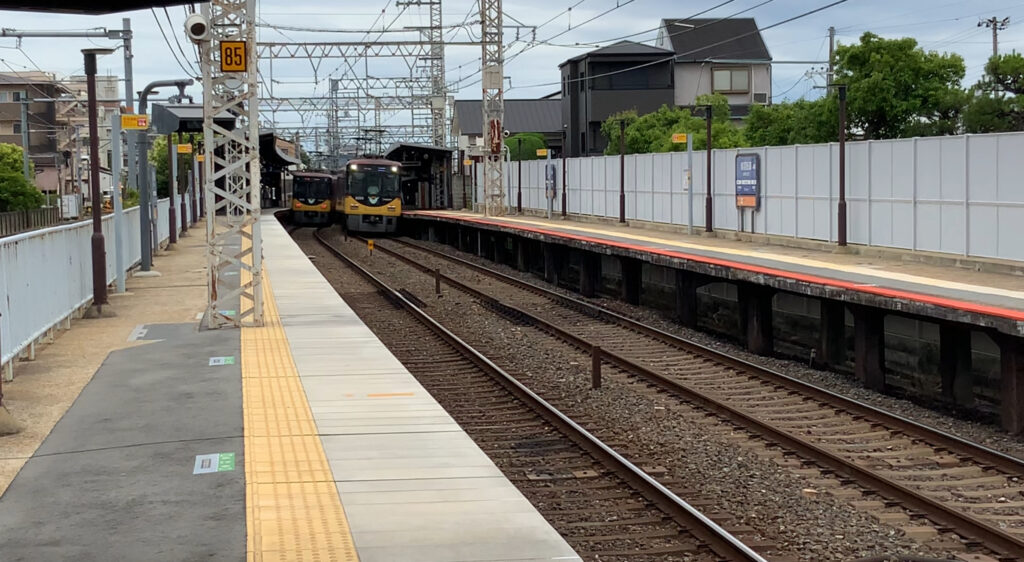
Gallery of the Parallel Rails: Enjoy the Views!
Take a look at the dynamic compositions possible when a station offers a front-row seat to two separate rail networks:
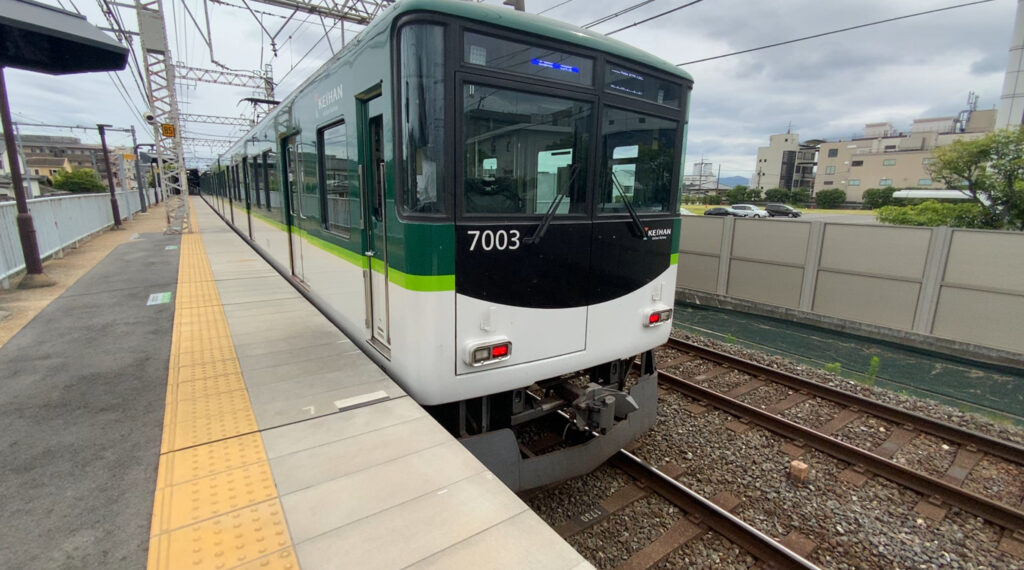
The Final Whistle: Why Toba-Kaidō is Essential
Toba-Kaidō Station proves that some of the absolute best spotting locations are hidden right in plain sight on local commuter lines. Offering a front-row view to the vintage engineering of the Keihan 1000 and 2400 series, the ultra-modern sleekness of the upgraded 7000 and 8000 series, and an open racetrack against JR West’s legendary 221s, it is a spectacular open-air theater for the senses. Skip the crowded city platforms, take advantage of those beautifully low fences, listen for the crossing alarms, and head down to Toba-Kaidō for the ultimate Kansai rail showdown.